Lynne Baab
resources for personal spirituality
and for congregational leaders

search this site:






Keeping the law inwardly, parts 1 and 2
Lynne Baab • Tuesday March 10 2026

Overall theme for the next few months: God’s law is love
Lesson 5: Keeping the law inwardly (Romans 2:12-29)
Key verse: Real circumcision is a matter of the heart — it is spiritual and not literal. Romans 2:29
1. Stepping into the Word
Sometimes we talk about obeying the letter of the law but not its spirit. Sarah can remember coming home as a teenager before her curfew in order to obey the letter of her parents’ law, but after they were asleep she snuck out again. They had never told her not to go back out after coming home! She had come home at the right time, so she was obeying what they said to do!
Some employees are required to be at the desks a certain number of hours per day, and they obey that requirement, while spending many of those hours surfing the internet and looking at social media. They are obeying the letter of the law while failing to meet their employers’ priority of productive work while at their desk.
Both Jesus and the apostle Paul uphold the idea that God has values and a mission that God wants us to embrace, but both Jesus and Paul upend the notion that God’s highest priority is obedience to the letter of the law. These great teachers link our actions with our heart. Jesus says to the Jewish leaders, “The tree is known by its fruit . . . . Out of the abundance of the heart the mouth speaks” (Matthew 12:33-34). Jesus goes on to talk about the “good treasure” inside a person that manifests itself in their actions (v. 35).
Throughout Paul’s letter to the Romans, he builds an argument that we all need God’s grace to change our hearts so that we can embrace God’s values. We can’t force our hearts to change. We can only open ourselves to the work of God’s Spirit in our inner being so that God can mold us. We receive God’s love and grace. We offer to God our willingness to let our hearts be changed.
God of grace, thank you that the Holy Spirit is at work inside us, transforming us into people who know you, love you, and long to follow you. Give us willing hearts to allow you shape us and use us in the world to show your love.
2. God’s law and human hearts
Paul begins his letter to the Romans with greetings, an introduction, and a statement about the power of the Gospel. In Romans 1:18, Paul begins a complex theological argument about the nature of the Gospel of Jesus Christ. His argument extends throughout most of the book of Romans. The first building block of his argument, found in the second half of the first chapter, is a critique of the behavior of the Gentiles. The second chapter opens with several verses about how foolish it is to judge others. After all, Paul argues, most of us are doing the same things that we criticize in others. In the middle of Romans 2, Paul focuses his argument on the shortcomings of the Jews. By the time he gets further into his argument, he will make his central point about why God’s grace is so essential: “All have sinned and fall short of the glory of God” (Romans 3:23).
“Doers of the law” are the ones who will be justified, not those who merely hear it or know it (Romans 2:13).Paul makes an intriguing point when he says that in some instances the law is written on the heart of Gentiles so that they are able to obey God’s law (v. 14 and 15). Here Paul is breaking down ethnic barriers as he does in Galatians 3:28, where he says that in Christ “there is no longer Jew or Greek.” While faith and works are often played off against each other, in these verses in Romans 2, Paul indicates that good works do indeed have value, that there will be “glory and honor and peace for everyone who does good” (v. 10). Good deeds, Paul seems to be saying, are an expression of faith, a connection articulated in James 2:14-26).
In Romans 2:17-24, Paul forcefully argues that even those Jews who know God’s law intimately are not able to fully obey it. Some Jews view themselves as good teachers and parents, but they are not obedient to the very laws they teach (v. 19-21). Paul names stealing, adultery, and idolatry as actions forbidden by the law but commonly practiced by Jews who view themselves as faithful (v. 21-23).
The people of Israel viewed circumcision as the definitive marker of Judaism, yet Paul argues that true circumcision involves the heart (Romans 2:28-29). For the Jews of the first century, Paul’s emphasis on internalizing the law would have seemed strange and confusing. For so many centuries they had emphasized actions. The New Testament teaches that Jesus makes it possible for the Holy Spirit to write God’s law on our hearts.
Why do you think Paul places so much emphasis on the heart?
֍ ֍ ֍
Two ways to subscribe.
If you’d like to receive an email when I post on this blog, sign up below under “subscribe.” That email and the posts on this blog are free and accessible for all.
If you’d like to help me cover the expenses for this blog and website, plus get a bonus post every month, you can subscribe on Patreon for $3 or $6 per month. My bonus posts focus on one or more of the hundreds of vivid quotations I’ve collected over five decades.
֍ ֍ ֍
Next week: Keeping the law inwardly, parts 3 and 4. Illustration by Dave Baab: Rockaway Beach, California.
My most recent magazine articles:
- The power of accurate teaching (how I came to believe women could be ordained as ministers)
- Nurturing a contemplative stance for navigating challenging times
- Meeting God in grief and gratitude
This lesson appeared in the Fall 2023 edition of The Present Word adult Bible study curriculum published by the Presbyterian Publishing Corporation. Used with permission.
Next post »« Previous post
Subscribe to updates
To receive an email alert when a new post is published, simply enter your email address below.

Lynne M. Baab, Ph.D., is an author and adjunct professor. She has written numerous books, Bible study guides, and articles for magazines and journals. Lynne is passionate about prayer and other ways to draw near to God, and her writing conveys encouragement for readers to be their authentic selves before God. She encourages experimentation and lightness in Christian spiritual practices. Read more »
Quick links:
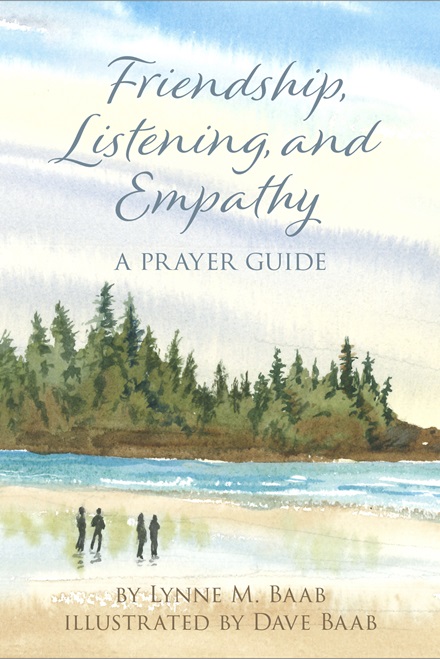
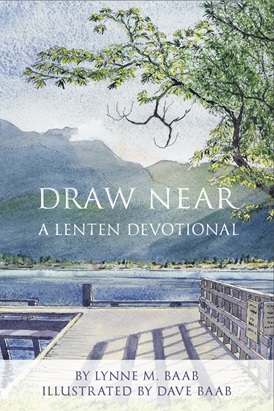
- Two latest books: Draw Near: A Lenten Devotional and Friendship, Listening and Empathy: A Prayer Guide (illustrated with Dave Baab's beautiful watercolors)
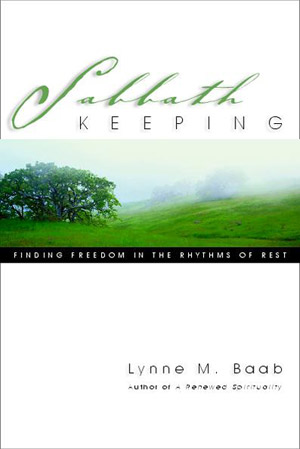
- Most popular book, Sabbath Keeping: Finding Freedom in the Rhythms of Rest (audiobook, paperback, and kindle)
- quick overview of all Lynne's books
- more than 50 articles Lynne has written for magazines on listening, Sabbath, fasting, spiritual growth, resilience for ministry, and congregational communication
You can listen to Lynne talk about these topics:
"Lynne's writing is beautiful. Her tone has such a note of hope and excitement about growth. It is gentle and affirming."
— a reader
"Dear Dr. Baab, You changed my life. It is only through God’s gift of the sabbath that I feel in my heart and soul that God loves me apart from anything I do."
— a reader of Sabbath Keeping
Subscribe
To receive an email alert when a new post is published, simply enter your email address below.
Featured posts
- Drawing Near to God with the Heart: first post of a series »
- Quotations I love: Henri Nouwen on being beloved »
- Worshipping God the Creator: the first post of a series »
- Sabbath Keeping a decade later: the first post of a series »
- Benedictine spirituality: the first post of a series »
- Celtic Christianity: the first post of a series »
- Holy Listening »
- A Cat with a Noble Character »
- Welcome to my website »
Tags
Archive
- September 2026 (3)
- August 2026 (4)
- July 2026 (5)
- June 2026 (5)
- May 2026 (5)
- April 2026 (3)
- March 2026 (3)
- February 2026 (2)
- January 2026 (6)
- December 2025 (6)
- November 2025 (4)
- October 2025 (3)
- September 2025 (5)
- August 2025 (4)
-
July 2025 (6)
- Praying about the flow of time: Praying about AND — again
- Praying about the flow of time: Praying for our ordinary lives
- Praying about the flow of time: Wind and water
- Praying about the flow of time: Paying attention to our stories
- What I learned from the past year's blog posts
- First post in a new series: Journey
- June 2025 (4)
- May 2025 (4)
- April 2025 (4)
- March 2025 (5)
- February 2025 (4)
- January 2025 (5)
- December 2024 (3)
-
November 2024 (5)
- Praying about the flow of time: Small actions with big benefits
- Praying about the flow of time: The overlap of the sacred and the ordinary
- Praying about the flow of time: The joy of the kingdom of God
- Praying about the flow of time: Advent can be confusing
- Praying about the flow of time: Why Jesus had to come
-
October 2024 (5)
- Praying about the flow of time: Rosh Hashanah, the Jewish New Year
- Praying about the flow of time: A month of celebrating renewal and moral responsibility
- Praying about the flow of time: The Feast of Tabernacles calls us to stay fluid and flexible
- Praying about the flow of time: Daily rhythms of prayer
- Praying about the flow of time: All Hallows Eve and All Saints Day
- September 2024 (3)
- August 2024 (5)
- July 2024 (3)
- June 2024 (5)
- May 2024 (5)
- April 2024 (4)
-
March 2024 (5)
- Friendship, loneliness, and prayer: Praying about distractions from empathy
- Friendship, loneliness, and prayer: Praying to keep empathy flowing
- Friendship, loneliness, and prayer: Everyday initiative
- Friendship, loneliness, and prayer: Praying for guidance for ending conversations
- Friendship, loneliness, and prayer: Reflecting on the series
- February 2024 (4)
- January 2024 (2)
-
December 2023 (6)
- Friendship, loneliness, and prayer: Initiating
- Friendship, loneliness, and prayer: Praying about listening roadblocks
- Friendship, loneliness, and prayer: Praying to love the poverty in our friends
- Friendship, loneliness, and prayer: Praying for “holy curiosity”
- Friendship, loneliness, and prayer: Praying for “holy listening”
- Friendship, loneliness, and prayer: Praying to give affection extravagantly
- November 2023 (4)
-
October 2023 (5)
- Friendship, loneliness and prayer: A listening skill with two purposes
- Friendship, loneliness, and prayer: Saying “thank you” to friends
- Friendship, loneliness, and prayer: One more way reflecting helps us
- Friendship, loneliness, and prayer: Lessons from two periods of loneliness
- Friendship, loneliness, and prayer: Types of reflecting, a listening skill
- September 2023 (4)
- August 2023 (4)
- July 2023 (5)
- June 2023 (3)
- May 2023 (6)
- April 2023 (4)
- March 2023 (4)
- February 2023 (4)
- January 2023 (4)
- December 2022 (5)
- November 2022 (1)
- October 2022 (5)
- September 2022 (5)
-
August 2022 (6)
- Draw near: Confessing sin without wallowing
- Draw near: A favorite prayer about peace, freedom, and much more
- Drawing near with Desmond Tutu: God’s love is the foundation for prayer
- Draw near: Worshipping God with Desmond Tutu
- Draw near: Yearning, beseeching and beholding with Desmond Tutu
- Draw near: Praising God with Desmond Tutu
- July 2022 (2)
- June 2022 (6)
- May 2022 (5)
- April 2022 (6)
- March 2022 (5)
- February 2022 (4)
- January 2022 (3)
- December 2021 (5)
- November 2021 (4)
- October 2021 (5)
- September 2021 (4)
- August 2021 (4)
- July 2021 (4)
- June 2021 (4)
- May 2021 (4)
- April 2021 (5)
- March 2021 (4)
- February 2021 (4)
- January 2021 (4)
- December 2020 (5)
- November 2020 (3)
- October 2020 (5)
- September 2020 (4)
- August 2020 (4)
- July 2020 (5)
- June 2020 (4)
-
May 2020 (4)
- Spiritual diary of sheltering in place: The lifeline of separating thoughts from feelings
- Spiritual diary of sheltering in place: The lifeline of welcoming prayer
- Spiritual diary of sheltering in place: a kite string as a lifeline
- Spiritual diary of sheltering in place: The lifeline of God’s distant future
-
April 2020 (7)
- Spiritual diary of self-isolation: the lifeline of God’s constancy
- Spiritual diary of sheltering in place: The lifeline of accepting my place as a clay jar
- Spiritual diary of sheltering in place: the lifeline of memories
- Spiritual diary of sheltering in place: the lifeline of “Good” in “Good Friday”
- Spiritual diary of sheltering in place: The lifeline of “easier does not mean easy”
- Spiritual diary of sheltering in place: The lifeline of nature
- Spiritual diary of sheltering in place: the lifeline of God’s voice through the Bible
-
March 2020 (7)
- Important anniversaries in 2020: The first Earth Day in 1970
- Important anniversaries in 2020: Florence Nightingale was born in 1820
- Spiritual diary of self-isolation: Weeks 1 and 2
- Spiritual diary of self-isolation: God's grace as a lifeline
- Spiritual diary of self-isolation: The lifeline of limits on thoughts
- Spiritual diary of self-isolation: Wrestling with God for a blessing
- Spiritual diary of self-isolation: Responding to terror by listening to Jesus voice
- February 2020 (4)
- January 2020 (5)
- December 2019 (4)
- November 2019 (4)
- October 2019 (5)
- September 2019 (4)
- August 2019 (5)
- July 2019 (4)
- June 2019 (4)
- May 2019 (5)
- April 2019 (4)
- March 2019 (4)
- February 2019 (4)
-
January 2019 (5)
- Nurturing friendships in a cellphone world: Jesus as Friend
- Nurturing friendships in a cellphone world: Friendship with Christ and friendship with others
- Nurturing friendships in a cellphone world: Who is my neighbor?
- Nurturing friendships in a cellphone world: Friendship as action
- Nurturing friendships in a cellphone world: Hymns that describe friendship with God
- December 2018 (3)
-
November 2018 (5)
- Connections between the Bible and prayer: Sensory prayer in Revelation
- First post in a new series: Nurturing friendships in a cellphone world
- Nurturing friendships in a cellphone world: Strong opinions and responses
- Nurturing friendships in a cellphone world: My conversation partners about friendship
- Nurturing friendships in a cellphone world: Two views about communication technologies
- October 2018 (4)
- September 2018 (4)
-
August 2018 (5)
- Providing Christian Care in Our Time
- Providing Christian care in our time: Seven trends in pastoral care today
- Providing Christian Care in Our Time: Skills for Pastoral Care
- Providing Christian care: The importance of spiritual practices
- First post in a new series: Connections between the Bible and prayer
- July 2018 (4)
- June 2018 (4)
- May 2018 (5)
- April 2018 (4)
- March 2018 (5)
- February 2018 (4)
- January 2018 (4)
- December 2017 (5)
- November 2017 (4)
- October 2017 (4)
- September 2017 (5)
- August 2017 (4)
- July 2017 (4)
- June 2017 (4)
-
May 2017 (5)
- My new spiritual practice: Separating thoughts from feelings
- My new spiritual practice: Feeling the feelings
- My new spiritual practice: Coping with feelings that want to dominate
- My new spiritual practice: Dealing with “demonic” thoughts
- My new spiritual practice: Is self-compassion really appropriate for Christians?
- April 2017 (4)
- March 2017 (5)
- February 2017 (4)
- January 2017 (4)
- December 2016 (5)
- November 2016 (4)
- October 2016 (4)
- September 2016 (5)
- August 2016 (4)
- July 2016 (4)
- June 2016 (4)
- May 2016 (5)
- April 2016 (4)
- March 2016 (5)
- February 2016 (4)
- January 2016 (4)
- December 2015 (4)
- November 2015 (4)
- October 2015 (5)
- September 2015 (4)
- August 2015 (4)
- July 2015 (4)
- June 2015 (4)
- May 2015 (4)
- April 2015 (6)
- March 2015 (4)
- February 2015 (4)
- January 2015 (4)
- December 2014 (5)
- November 2014 (4)
- October 2014 (4)
- September 2014 (4)
- August 2014 (5)
- July 2014 (4)
- June 2014 (7)