Lynne Baab
resources for personal spirituality
and for congregational leaders

search this site:





Liberty not license, parts 3 and 4
Lynne Baab • Thursday July 16 2026
Overall theme from January through today: God’s law is love
Lesson 13: Liberty not license (1 Corinthians 8; 10:23–11:1)
Key verse: “All things are lawful,” but not all things build up. 1 Corinthians 10:23b
Freedom from sin for the purpose of love
Christian theologians and ethicists talk about freedom from and freedom for. In Christ, we are freed from the power of sin, death, and evil. This freedom is profound and life-changing. Many forms of destructive behavior no longer seem attractive. Many of the fears that plagued us are lifted. We are freed from the drive to earn God’s approval by obedience to rules or by any form of self-directed spirituality. Because of Jesus’s life, death, and resurrection, we are called “beloved” by God. We are accepted just as we are.
Because we are freed from the anxiety of having to prove ourselves, we can join Christians throughout the ages in worship, enjoying God’s presence, making music to God, singing joyfully. We are free to enjoy the beauty of God’s creation, seeing God’s handiwork in bright flowers, tall trees, majestic mountains, and rushing waves. We are free to bring every concern to God in prayer, and we can pray the words of even the most anguished and confrontational psalms with full assurance of our acceptance before God through Jesus. We are free to speak honestly about our weaknesses, regrets, and failings in Christian community, knowing we do not have to impress others in order to look good to God. This enormous gift of freedom from having to earn God’s approval blesses every moment of our lives.
The gift of freedom from sin, death, and evil through Jesus is accompanied by a further gift, the Holy Spirit poured into our hearts. In John 14:15-30 and 16:4-15, Jesus describes the ways that the Holy Spirit will implant Jesus’s teaching in our heart. The Holy Spirit will, in fact, be Jesus’s presence with us every day of our lives, guiding us and giving us strength to do what is right. Through the Holy Spirit, Jesus is inside us and walks beside us. Therefore, it is inconceivable that we would want to do something that breaks Jesus’s heart, and harming someone made in the image of God would do that.
Paul focuses on a very specific issue related to freedom. Christians throughout the ages have used the situation in Corinth as a case study to explore limits on our freedom for the sake of another’s faith and spiritual well-being. In Christ, we are freed for love — love for God and love for everything God has made, including all fellow humans, our Christian brothers and sisters, and God’s beautiful creation. Therefore, we voluntarily limit our own freedom in situations when exercising our freedom would damage someone or something God created and loves.
When you think of being freed from something and being freed for something, what specific aspects of freedom come to mind? What are your biggest challenges related to freedom?
Stepping into the world
When Paul writes to the Christians in Corinth, he is addressing people who have interpreted freedom in Christ as the permission to do anything they want. For those of us who become Christians out of wild and crazy backgrounds, Paul’s letters to the Corinthians can feel helpful and relevant to the challenges of trying to figure out which limits are appropriate as Christians, and which limits are not necessary.
For those of us who were raised in churchgoing families, who as children experienced a great deal of pressure to conform and be “good,” Paul’s first letter to the Corinthians can feel a bit confusing. We already know how to limit our freedom for the sake of others. Our parents pushed us, year after year, to moderate our behavior so that we would look good to others. Many of us bring into adulthood a pattern of looking around constantly to see what others are thinking about our actions. It feels like the last thing we need to hear from the Bible is more pressure to pay attention to the opinions of others.
Paul, however, is not telling the Christians in Corinth to focus on the opinions of others. He wants Christians to be aware of the spiritual well-being of others. He wants us to ponder whether our exercise of freedom will damage other people by encouraging them to pursue idolatry in any form. He wants us to think about what is beneficial to ourselves and others. His focus is on behavior that builds up. He is not interested in helping Christians learn how to impress others.
In 1 Corinthians 11:1, Paul makes a statement that can sound egotistical: “Be imitators of me, as I am of Christ.” Paul is an excellent model for many behaviors relevant to all Christians. He is concerned about the spiritual well-being of others without necessarily trying to look good to them. He ignores the opinions of others when they conflict with his sense of purpose in Christ. Paul limits his own freedoms so that he can continue to preach the gospel effectively. He tries to imitate Jesus. He writes in his second letter to the Corinthians that all of us are being transformed into the image of Jesus “from one degree of glory to another; for this comes from the Lord, the Spirit” (2 Corinthians 3:18). Paul participates in that transformation in every way that he can. The challenge for those of us who focus too easily on the opinions of others is to shift our focus toward well-being and wholeness for ourselves and others, modeled after Jesus’s love.
Can you think of an instance where you limited your freedom for the spiritual well-being of another person? What did you learn about love from that action?
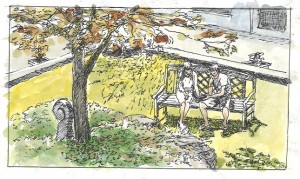
Next week: What I've learned about grief. Illustration by Dave Baab: Preliminary sketch for a commissioned painting for Unicol, one of the colleges at the University of Otago, Dunedin, New Zealand.
This is the last post in a series that began in January. The most popular posts in this series are:
- Jesus eats with a Pharisee, parts 1 and 2 and parts 3 and 4
- Communal discernment of the heart of the gospel, parts 3 and 4
- The superiority of the Gospel, parts 1 and 2
This lesson appeared in the Fall 2023 edition of The Present Word adult Bible study curriculum published by the Presbyterian Publishing Corporation. Used with permission.
֍ ֍ ֍
Two ways to subscribe.
If you’d like to receive an email when I post on this blog, sign up below under “subscribe.” That email and the posts on this blog are free and accessible for all.
If you’d like to help me cover the expenses for this blog and website, plus get a bonus post every month, you can subscribe on Patreon for $3 or $6 per month. My bonus posts focus on one or more of the hundreds of vivid quotations I’ve collected over five decades.
Next post »« Previous post
Subscribe to updates
To receive an email alert when a new post is published, simply enter your email address below.

Lynne M. Baab, Ph.D., is an author and adjunct professor. She has written numerous books, Bible study guides, and articles for magazines and journals. Lynne is passionate about prayer and other ways to draw near to God, and her writing conveys encouragement for readers to be their authentic selves before God. She encourages experimentation and lightness in Christian spiritual practices. Read more »
Quick links:
- Two latest books: Draw Near: A Lenten Devotional and Friendship, Listening and Empathy: A Prayer Guide (illustrated with Dave Baab's beautiful watercolors)
- Most popular book, Sabbath Keeping: Finding Freedom in the Rhythms of Rest (audiobook, paperback, and kindle)
- quick overview of all Lynne's books
- more than 50 articles Lynne has written for magazines on listening, Sabbath, fasting, spiritual growth, resilience for ministry, and congregational communication
You can listen to Lynne talk about these topics:
"Lynne's writing is beautiful. Her tone has such a note of hope and excitement about growth. It is gentle and affirming."
— a reader
"Dear Dr. Baab, You changed my life. It is only through God’s gift of the sabbath that I feel in my heart and soul that God loves me apart from anything I do."
— a reader of Sabbath Keeping
Subscribe
To receive an email alert when a new post is published, simply enter your email address below.
Featured posts
- Drawing Near to God with the Heart: first post of a series »
- Quotations I love: Henri Nouwen on being beloved »
- Worshipping God the Creator: the first post of a series »
- Sabbath Keeping a decade later: the first post of a series »
- Benedictine spirituality: the first post of a series »
- Celtic Christianity: the first post of a series »
- Holy Listening »
- A Cat with a Noble Character »
- Welcome to my website »
Tags
Archive
- October 2026 (1)
- September 2026 (6)
- August 2026 (4)
- July 2026 (5)
- June 2026 (5)
- May 2026 (5)
- April 2026 (3)
- March 2026 (3)
- February 2026 (2)
- January 2026 (6)
- December 2025 (6)
- November 2025 (4)
- October 2025 (3)
- September 2025 (5)
- August 2025 (4)
-
July 2025 (6)
- Praying about the flow of time: Praying about AND — again
- Praying about the flow of time: Praying for our ordinary lives
- Praying about the flow of time: Wind and water
- Praying about the flow of time: Paying attention to our stories
- What I learned from the past year's blog posts
- First post in a new series: Journey
- June 2025 (4)
- May 2025 (4)
- April 2025 (4)
- March 2025 (5)
- February 2025 (4)
- January 2025 (5)
- December 2024 (3)
-
November 2024 (5)
- Praying about the flow of time: Small actions with big benefits
- Praying about the flow of time: The overlap of the sacred and the ordinary
- Praying about the flow of time: The joy of the kingdom of God
- Praying about the flow of time: Advent can be confusing
- Praying about the flow of time: Why Jesus had to come
-
October 2024 (5)
- Praying about the flow of time: Rosh Hashanah, the Jewish New Year
- Praying about the flow of time: A month of celebrating renewal and moral responsibility
- Praying about the flow of time: The Feast of Tabernacles calls us to stay fluid and flexible
- Praying about the flow of time: Daily rhythms of prayer
- Praying about the flow of time: All Hallows Eve and All Saints Day
- September 2024 (3)
- August 2024 (5)
- July 2024 (3)
- June 2024 (5)
- May 2024 (5)
- April 2024 (4)
-
March 2024 (5)
- Friendship, loneliness, and prayer: Praying about distractions from empathy
- Friendship, loneliness, and prayer: Praying to keep empathy flowing
- Friendship, loneliness, and prayer: Everyday initiative
- Friendship, loneliness, and prayer: Praying for guidance for ending conversations
- Friendship, loneliness, and prayer: Reflecting on the series
- February 2024 (4)
- January 2024 (2)
-
December 2023 (6)
- Friendship, loneliness, and prayer: Initiating
- Friendship, loneliness, and prayer: Praying about listening roadblocks
- Friendship, loneliness, and prayer: Praying to love the poverty in our friends
- Friendship, loneliness, and prayer: Praying for “holy curiosity”
- Friendship, loneliness, and prayer: Praying for “holy listening”
- Friendship, loneliness, and prayer: Praying to give affection extravagantly
- November 2023 (4)
-
October 2023 (5)
- Friendship, loneliness and prayer: A listening skill with two purposes
- Friendship, loneliness, and prayer: Saying “thank you” to friends
- Friendship, loneliness, and prayer: One more way reflecting helps us
- Friendship, loneliness, and prayer: Lessons from two periods of loneliness
- Friendship, loneliness, and prayer: Types of reflecting, a listening skill
- September 2023 (4)
- August 2023 (4)
- July 2023 (5)
- June 2023 (3)
- May 2023 (6)
- April 2023 (4)
- March 2023 (4)
- February 2023 (4)
- January 2023 (4)
- December 2022 (5)
- November 2022 (1)
- October 2022 (5)
- September 2022 (5)
-
August 2022 (6)
- Draw near: Confessing sin without wallowing
- Draw near: A favorite prayer about peace, freedom, and much more
- Drawing near with Desmond Tutu: God’s love is the foundation for prayer
- Draw near: Worshipping God with Desmond Tutu
- Draw near: Yearning, beseeching and beholding with Desmond Tutu
- Draw near: Praising God with Desmond Tutu
- July 2022 (2)
- June 2022 (6)
- May 2022 (5)
- April 2022 (6)
- March 2022 (5)
- February 2022 (4)
- January 2022 (3)
- December 2021 (5)
- November 2021 (4)
- October 2021 (5)
- September 2021 (4)
- August 2021 (4)
- July 2021 (4)
- June 2021 (4)
- May 2021 (4)
- April 2021 (5)
- March 2021 (4)
- February 2021 (4)
- January 2021 (4)
- December 2020 (5)
- November 2020 (3)
- October 2020 (5)
- September 2020 (4)
- August 2020 (4)
- July 2020 (5)
- June 2020 (4)
-
May 2020 (4)
- Spiritual diary of sheltering in place: The lifeline of separating thoughts from feelings
- Spiritual diary of sheltering in place: The lifeline of welcoming prayer
- Spiritual diary of sheltering in place: a kite string as a lifeline
- Spiritual diary of sheltering in place: The lifeline of God’s distant future
-
April 2020 (7)
- Spiritual diary of self-isolation: the lifeline of God’s constancy
- Spiritual diary of sheltering in place: The lifeline of accepting my place as a clay jar
- Spiritual diary of sheltering in place: the lifeline of memories
- Spiritual diary of sheltering in place: the lifeline of “Good” in “Good Friday”
- Spiritual diary of sheltering in place: The lifeline of “easier does not mean easy”
- Spiritual diary of sheltering in place: The lifeline of nature
- Spiritual diary of sheltering in place: the lifeline of God’s voice through the Bible
-
March 2020 (7)
- Important anniversaries in 2020: The first Earth Day in 1970
- Important anniversaries in 2020: Florence Nightingale was born in 1820
- Spiritual diary of self-isolation: Weeks 1 and 2
- Spiritual diary of self-isolation: God's grace as a lifeline
- Spiritual diary of self-isolation: The lifeline of limits on thoughts
- Spiritual diary of self-isolation: Wrestling with God for a blessing
- Spiritual diary of self-isolation: Responding to terror by listening to Jesus voice
- February 2020 (4)
- January 2020 (5)
- December 2019 (4)
- November 2019 (4)
- October 2019 (5)
- September 2019 (4)
- August 2019 (5)
- July 2019 (4)
- June 2019 (4)
- May 2019 (5)
- April 2019 (4)
- March 2019 (4)
- February 2019 (4)
-
January 2019 (5)
- Nurturing friendships in a cellphone world: Jesus as Friend
- Nurturing friendships in a cellphone world: Friendship with Christ and friendship with others
- Nurturing friendships in a cellphone world: Who is my neighbor?
- Nurturing friendships in a cellphone world: Friendship as action
- Nurturing friendships in a cellphone world: Hymns that describe friendship with God
- December 2018 (3)
-
November 2018 (5)
- Connections between the Bible and prayer: Sensory prayer in Revelation
- First post in a new series: Nurturing friendships in a cellphone world
- Nurturing friendships in a cellphone world: Strong opinions and responses
- Nurturing friendships in a cellphone world: My conversation partners about friendship
- Nurturing friendships in a cellphone world: Two views about communication technologies
- October 2018 (4)
- September 2018 (4)
-
August 2018 (5)
- Providing Christian Care in Our Time
- Providing Christian care in our time: Seven trends in pastoral care today
- Providing Christian Care in Our Time: Skills for Pastoral Care
- Providing Christian care: The importance of spiritual practices
- First post in a new series: Connections between the Bible and prayer
- July 2018 (4)
- June 2018 (4)
- May 2018 (5)
- April 2018 (4)
- March 2018 (5)
- February 2018 (4)
- January 2018 (4)
- December 2017 (5)
- November 2017 (4)
- October 2017 (4)
- September 2017 (5)
- August 2017 (4)
- July 2017 (4)
- June 2017 (4)
-
May 2017 (5)
- My new spiritual practice: Separating thoughts from feelings
- My new spiritual practice: Feeling the feelings
- My new spiritual practice: Coping with feelings that want to dominate
- My new spiritual practice: Dealing with “demonic” thoughts
- My new spiritual practice: Is self-compassion really appropriate for Christians?
- April 2017 (4)
- March 2017 (5)
- February 2017 (4)
- January 2017 (4)
- December 2016 (5)
- November 2016 (4)
- October 2016 (4)
- September 2016 (5)
- August 2016 (4)
- July 2016 (4)
- June 2016 (4)
- May 2016 (5)
- April 2016 (4)
- March 2016 (5)
- February 2016 (4)
- January 2016 (4)
- December 2015 (4)
- November 2015 (4)
- October 2015 (5)
- September 2015 (4)
- August 2015 (4)
- July 2015 (4)
- June 2015 (4)
- May 2015 (4)
- April 2015 (6)
- March 2015 (4)
- February 2015 (4)
- January 2015 (4)
- December 2014 (5)
- November 2014 (4)
- October 2014 (4)
- September 2014 (4)
- August 2014 (5)
- July 2014 (4)
- June 2014 (7)